630-665-2500
128D S. County Farm Road, Wheaton, IL 60187

Recent Blog Posts
What Is Included in a Purchase Agreement When Buying a Home?
 Shopping for a new home is an exciting process, especially once you find a home that fits everything on your checklist. Purchasing a home is a big accomplishment for many people, but the process that you must go through can be confusing and overwhelming for many people. Before you can move into your new home, there are a few things that you need to take care of on the legal side. No home sale can be completed without a contract, also referred to as the purchase agreement, in addition to an array of other forms and documents. Your purchase agreement is one of the most important documents involved in the home-buying process. Once you and all applicable parties sign the agreement, it is considered to be legally binding, which is why you should know what is included in the agreement you are signing.
Components of a Home Purchase Agreement
Once you have found your dream home, you will have to submit your offer to the buyer in written format. Certain information is always included in the purchase agreement, such as the contact information for both the buyer and the seller, a description of the property, including the property’s address, the purchase price, the condition of the property, and any items that may be included in the sale, like the appliances. In most cases, there will be other conditions that need to be met before the agreement can be valid. These are called contingencies, which spell out the rights and obligations of both the seller and buyer. Some of the most common contingencies include:
Tips for Estate Tax Planning in Illinois
 The topic of estate planning is important, but it can seem daunting to think about. When a person dies, an estate tax is imposed on the value of the estate left behind, before any beneficiaries (family members or close friends) inherit anything.
An inheritance tax is imposed on an individual who receives any type of inheritance. Although some states do have inheritance taxes, there is no federal or state tax imposed on inheritances in Illinois. It is important to distinguish between these two kinds of taxes in order to protect the rights of those on the receiving end.
Understanding the Illinois Estate Tax
There is both a federal estate tax and an Illinois estate tax, however, the size of the estate must be significant for either one of these types of estate tax to apply. The Illinois estate tax rate is graduated and can go up to 16 percent, but it is only applied on estates worth more than $4 million. This means that if a decedent’s total estate is worth less than $4 million, the estate does not have to pay anything to the state. If an estate is worth more than $4 million, there is a progressive estate tax rate, and the estate will have to pay before money can be distributed to any heirs.
Understanding How Mechanic’s Liens Affect Real Estate
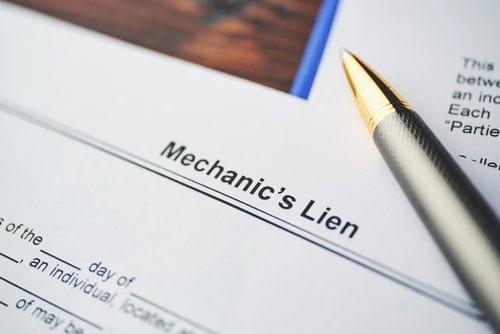 Residential real estate matters can be complicated since they often involve a lot of paperwork and legal terminology. However, it is important to understand all of the terms to avoid losing time or money. One such real estate issue many people may not be familiar with is a mechanic’s lien, which is a legal document that is filed against a house or other similar type of property. Mechanic’s liens are a means by which subcontractors and suppliers can seek payment for upgrades or enhancements that were performed on a property if they are not getting paid per the terms of their contracts.
Making Home Improvements
Homeowners can face a mechanic’s lien even if they do not miss repair or home improvement payments. For instance, if you have your kitchen remodeled and the contractor does not pay the material supplier, that individual or company can put a lien against your house as a way of recovering the money they are owed. You are then responsible for paying any subcontractors, suppliers, or workers for their labor (time) and materials.
Tips for Going Through the Probate Process in Illinois
 Estate planning includes several different legal documents that outline a person’s future wishes through the creation of a will or a trust. Making decisions ahead of time can alleviate the uncertainty and potential disputes after someone passes away. Probate is the judicial process in which an individual’s will is proven in a court of law and accepted as a valid public document that is the true last testament of the deceased. In addition, it is also the process by which the estate is settled according to the laws in the state of residence of the deceased person at his or her time of death if he or she does not have a will (intestate).
Understanding the Executor’s Role
An Executor is named in a Last Will and Testament to oversee the probate of his or her estate. In many cases, this individual is named in the will, but any competent adult can volunteer to be the personal representative (PR) of the estate. The duties and responsibilities of the executor should be taken seriously. Here are a few tips for successfully completing them:
Should I Use a Revocable Living Trust or an Irrevocable Living Trust?

Although many people assume that a last will and testament is the only estate planning tool that they need, a will is not always the best way to accomplish all of your estate planning goals. Other estate tools such as living trusts are often overlooked due to confusion or misunderstandings about the purpose of these tools. A trust is a legally binding agreement involving an individual or entity called a trustee who holds property for the benefit of a beneficiary. A living trust is an advantageous tool for managing your assets during your lifetime and then passing those assets to beneficiaries upon your death. If you are interested in using a living trust to manage your assets, you may question whether you should use a revocable living trust or an irrevocable living trust.
Revocable Trusts
As the name implies, a revocable trust is one that is able to be revoked or canceled. If you place assets in a revocable trust, you remain in control of those assets. You are also considered to be the owner of those assets in the eyes of the Internal Revenue Service and other governmental agencies. Because the property is yours, you can choose to remove the property from the trust and use it for other purposes at any time. A revocable living trust covers you while you are alive, in the event that you are incapacitated by illness or injury, and after you pass away. One of the greatest benefits of a revocable living trust is that it avoids probate– the public legal process during which a will is validated in court. Because you remain the owner of the property placed in a revocable trust, transferring property to a revocable trust does not affect your federal income taxes or estate income.
What Are the Different Types of Powers of Attorney in Illinois?

In the instance that you become unable to handle your own affairs, either financially or medically, it is important that you have a power of attorney (POA) set in place. This allows you to designate who will be in charge of your affairs if you are unable to do so on your own. The person designated to handle the affairs is known as the “agent” and the person who the POA concerns is known as the “principal.” If you are intending on getting your affairs in order, it is important to work with a reputable estate planning attorney to ensure that the POA is valid and the proper terms are included.
General POA Requirements
There are a number of requirements that must be met when creating a POA in the state of Illinois. In order for the legal document to be valid, the agent must be designated by name and their powers must be outlined. POAs are unique to your circumstances so you should include, in detail, what your agent is legally responsible for. This person must be at least 18 years of age. The POA must be signed by the principal and at least one witness must be present. The principal must also acknowledge their signature, and thus their consent to the POA, in front of a notary public, or attorney.
How to Prevent a Contested Estate in Illinois

The time after a loved one’s passing is hard for all grieving family members, and it can be even more difficult when disputes arise over the decedent’s wishes or the validity of the will. As you prepare your estate plan, you should consider what you can do to prevent these disputes from happening after your death so that your family remains intact and well-provided for. The following tips will help prevent a contested estate.
Creating an Illinois Estate Plan to Minimize Disputes
Many contested estate disputes happen because family members are dissatisfied with how the terms of the will affect them, while others may be based more firmly on legal grounds. You should, of course, make sure that the terms of your estate plan reflect what you truly want, but there are also steps that you can take to help your family and beneficiaries understand your reasoning and show that you were of sound mind when making your decisions. These include:
What Are Your Options for Avoiding a Foreclosure in Illinois?

When homeowners default on their mortgage payments, sometimes the only option for lenders is to initiate foreclosure proceedings. However, this can lead to conflict between lenders and borrowers that may result in property damage, increased expenses, and challenges related to finding a new buyer. Sometimes, it is in the best interest of both lenders and borrowers to consider other options that may prevent the need for foreclosure.
Understanding Illinois Foreclosure Alternatives
When possible, lenders may consider working with homeowners to explore options that can prevent defaulting on payments or otherwise make a foreclosure unnecessary. These options include:
- Loan modifications: Depending on the type of loan, it may be possible to pursue a modification to the terms, including lower monthly payments, lower interest rates, and a longer payback period.
- Forbearance: As a temporary solution, the lender may allow the borrower to make smaller monthly payments for a period of time and then make up the difference in future monthly payments.
What You Should Know About Wills and Living Trusts

The process of estate planning can be challenging, depending on the size and complexity of your estate and what you want done with your assets upon your death. Proper estate planning requires a level of knowledge of the various tools, methods, and strategies that are often employed. For example, it is important to understand the differences between a will and a living trust and how those differences could affect your heirs. It is also a good idea to work closely with a qualified lawyer who can provide assistance in meeting your estate planning needs.
What Is a Will?
At its most basic, a will is a legal document that allows you to specify how your assets and possessions are to be distributed. A will can also name a legal guardian for any minor children. An important characteristic of a will is that it is a revocable and amendable document that you can control until your death. It can be updated, altered, or changed to accommodate changing situations, such as the death of an heir or divorce. Keep in mind, however, that there are some major limitations with a will—particularly when it comes to the amount of control you have over your estate after your death. The tax consequences for your heirs may also be significant if your estate plan consists only of a will.
What You Need to Know About Buying an REO Property in 2020

If you are trying to find a new home at a good price, you might have family and friends mentioning that you try to find a foreclosure property. In theory, this is not a bad idea. A home that is for sale because the current owner defaulted on his or her mortgage could sell for far below market value. In the wake of COVID-19, however, foreclosures have all but stopped, thanks largely to a moratorium put in place on foreclosures on federally insured mortgages. Private lenders have mostly followed suit, which means that there are probably not many foreclosure properties available. The good news is that you may have another option for finding a good value: a real estate owned home, more commonly known as an REO property.
What Is an REO Property?
When a home is foreclosed on due to default on the mortgage, the lender (or current holder of the mortgage loan) will eventually seize the home and attempt to sell it. This sale usually takes place at a public auction. In most cases, a foreclosure auction does not give participants the opportunity to see the property or inspect the home ahead of time. This means that bidders are effectively making offers on a property about which they know very little. Additionally, the highest bidder is usually required to pay cash for the property at the time of the auction. Financing is uncommon at foreclosure auctions.